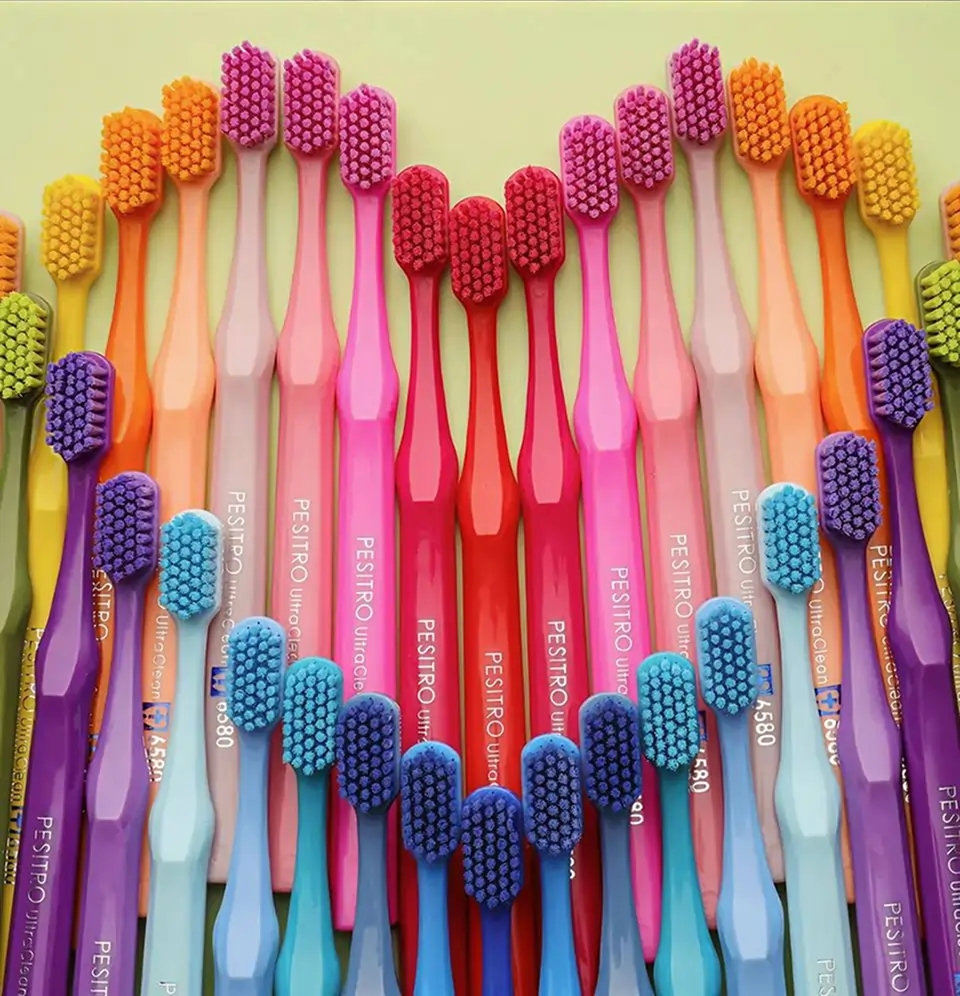
When shopping for a toothbrush, most people look at the handle color or the fancy package etc. The real work—the cleaning, the protection, and the polishing—is done entirely by the bristles.
Choosing the wrong material can actually harm your teeth or turn your brush into a breeding ground for bacteria. Let’s break down the evolution of bristle technology and why PESITRO’s Ultra-X™ represents the clinical standard.
Natural Bristles
Historically, brushes were made from boar, badger, or goat hair.
Natural hairs are hollow and irregular. They absorb massive amounts of moisture, split easily, and become a perfect “hotel” for bacteria to multiply.
Modern dentists universally reject them. They are unhygienic, abrasive, and wear out in weeks.
The Old Standard: Nylon Bristles
For decades, nylon has been the global default. It is strong and cheap to produce.
While better than animal hair, standard nylon still acts like a sponge. It absorbs up to 3.00% of its weight in water. This moisture retention allows bacteria to thrive between uses.
When nylon gets wet, it gets soft. It loses its “memory” and elasticity quickly, leading to splayed bristles that can scratch enamel and irritate gums rather than cleaning them.
PESITRO Ultra-X™ Polyester Technology
This is the breakthrough. PESITRO uses Ultra-X™, a high-performance polyester filament engineered specifically for clinical oral care.
Why Ultra-X™ Wins the Science Test:
Unlike nylon (3.00%), Ultra-X™ absorbs only 0.20% moisture. This means your brush dries almost instantly, preventing bacterial buildup and ensuring a hygienic clean every single time.
Because it doesn’t absorb water, the bristle maintains its elasticity and cleaning power 2x longer than standard nylon.
The material is naturally softer and smoother, reducing trauma to gum tissue while still effectively breaking up plaque.
Density & Precision
It’s not just about the material; it’s about how we use it.
Every single Ultra-X™ filament undergoes a machine-rounding process. This ensures that the tip is smooth, preventing micro-scratches on your enamel.
Because Ultra-X™ filaments are ultra-fine, we can pack more of them into a single head. While standard brushes have ~1,000 bristles, PESITRO ranges from 1,580 (for deep cleaning) up to 12,680 (for feather-soft care). This creates a dense, effective cleaning surface that wipes away plaque rather than just scratching it.
Don’t settle for outdated technology. By choosing PESITRO™, you aren’t just buying a toothbrush; you are investing in Ultra-X™ science—hygienic, durable, and engineered to protect your smile.